
Why are homemade granola not crunchy? This common frustration plagues many granola enthusiasts. Crunchy granola is the gold standard of breakfast and snack options, but achieving that perfect texture can be tricky. Whether it’s the ingredients, baking techniques, or storage methods, several factors contribute to granola turning out soft or chewy instead of delightfully crisp. This article explores common mistakes and shares foolproof methods to achieve that coveted crunch.
Table of Contents
Introduction to Homemade Granola Crunchiness
Granola is more than just oats and nuts—it’s a texture-driven culinary delight. But when homemade granola falls flat on crunch, it loses its charm. In this section, we’ll delve into the essence of crunchiness and why it matters.
What Makes Granola Crunchy?
Crunchiness comes down to a delicate balance of moisture content, cooking technique, and the right combination of ingredients. Achieving this balance is essential to making granola clusters that are not only delicious but also satisfying to bite into.
Importance of Crunch in Homemade Granola
Why does crunch matter? Apart from the taste and texture, crunchy granola retains its freshness longer and is easier to store. Plus, it enhances the eating experience, whether sprinkled over yogurt, paired with milk, or eaten by the handful.
Stay tuned! The following sections will break down exactly why your granola isn’t crunchy and offer practical solutions to fix it.
Understanding the Common Reasons for Lack of Crunch

Sometimes, despite your best efforts, homemade granola can lack the signature crunch that makes it irresistible. Let’s uncover why homemade granola isn’t crunchy and explore the main culprits.
Moisture Content and Its Role
One of the biggest reasons granola doesn’t crisp up is excess moisture. If the oats or other ingredients contain too much water, the granola can turn soggy during baking. Ingredients like fresh fruits or improperly stored oats can introduce unwanted dampness, preventing that golden crunch.
- Pro tip: Opt for dry ingredients and bake your granola long enough to evaporate excess moisture. A low and slow baking method works wonders!
Inadequate Baking Techniques
Granola isn’t forgiving when baking techniques fall short. Uneven spreading, fluctuating oven temperatures, or even placing the tray on the wrong oven rack can all lead to chewy, uneven results.
- Solution: Always spread your granola thinly on the baking sheet. Bake it on the middle rack to ensure even heat distribution. Consistency is the key to a crunchy outcome.
Missing Ingredients: The Crunchy Factor
Certain ingredients, like oils and sweeteners, aren’t just for flavor—they’re essential for texture. Without enough fat or sticky sweeteners to bind and caramelize, your granola may never achieve that sought-after crunch.
- Quick fix: Use natural sweeteners like honey or maple syrup and a generous drizzle of oil to help your granola crisp up beautifully.
Baking Techniques for Crunchy Granola
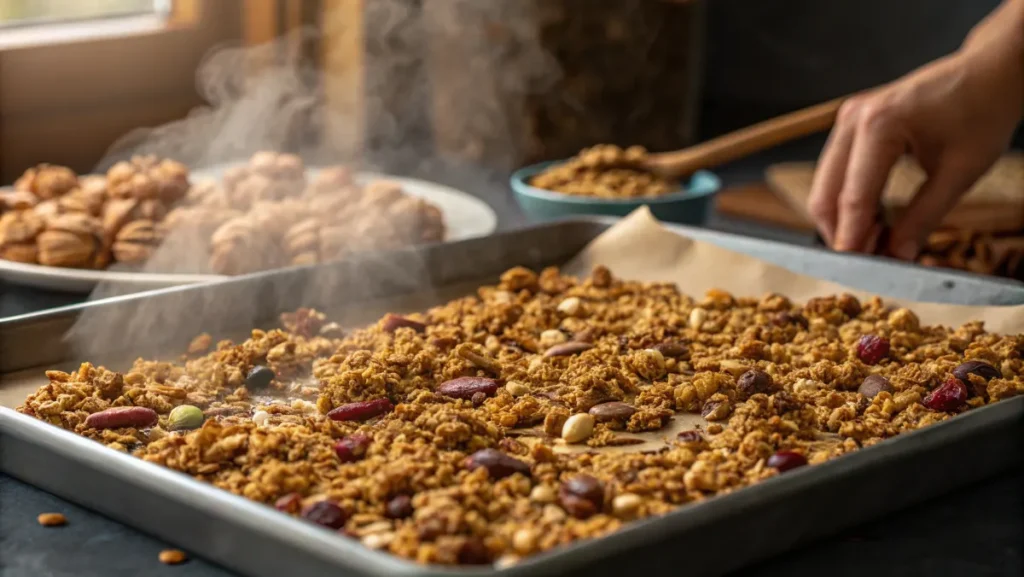
To make granola truly crunchy, proper baking techniques are non-negotiable. Here’s how to get it just right.
The Right Oven Temperature
Granola bakes best at a moderate temperature—around 300°F to 325°F. A too-hot oven can burn the granola’s edges before the inside dries out, while a cooler oven may not dry the mixture enough.
- Keep an eye on it: Bake slowly to avoid burning, and rotate your baking tray halfway through to ensure even heat exposure.
Stirring Frequency: To Stir or Not to Stir?
Stirring granola while it bakes can break up clusters, but it also ensures even toasting. The trick is finding a balance between stirring occasionally and letting clusters form naturally.
- Pro tip: Stir only once or twice during baking if you want to keep some clusters intact. Too much stirring can disrupt the crunch.
Cooling Process: Locking in the Crunch
Cooling granola properly is as critical as baking it. Freshly baked granola continues to crisp up as it cools. If you pack it away too soon, trapped steam will soften your hard work.
- Golden rule: Let the granola cool completely on the tray before transferring it to an airtight container. This locks in the crunch while keeping it fresh.
By mastering these baking techniques, you’ll no longer have to wonder, why are homemade granola not crunchy? Instead, you’ll enjoy perfectly crisp results every time!
Choosing the Right Ingredients
Granola’s crunch factor heavily relies on its ingredients. The right combination can make or break your homemade recipe. Here’s how to make your ingredient choices count.
Selecting the Right Oats
Oats are the star of granola, but not all oats are created equal. Rolled oats (also called old-fashioned oats) are your best bet for crunchy granola. Instant or quick oats can turn mushy during baking, ruining the texture.
- Tip: Choose high-quality rolled oats for a hearty, crunchy base. Avoid steel-cut oats, as they won’t soften enough in the oven.
Oils and Sweeteners for Crunch
Oils and sweeteners are more than flavor enhancers—they’re essential for achieving that perfect crunch. Natural sweeteners like honey or maple syrup bind ingredients together and caramelize in the oven, adding both flavor and texture.
- Why it matters: Skimping on oil or sweeteners can leave your granola dry and lifeless. Use coconut oil, olive oil, or butter for a rich texture.
Adding Crunchy Additives: Nuts and Seeds
Nuts and seeds provide extra crunch and nutritional value. Toasting them lightly before mixing them into your granola can amplify their flavor and texture.
- Pro tip: Add nuts and seeds halfway through baking to avoid burning them. Almonds, pecans, chia seeds, and pumpkin seeds work particularly well.
For more inspiration, check out this Vanilla Nut Granola Recipe to see how different combinations of nuts and flavors come together for a crunchy treat.
Avoiding Common Mistakes
Even the best ingredients and techniques can fail if you make these common mistakes. Let’s address why homemade granola isn’t crunchy and how to avoid these pitfalls.
Overcrowding the Baking Tray
Crowding the baking tray is one of the most common mistakes when making granola. Layers that are too thick can trap steam, leaving your granola soggy instead of crisp.
- Solution: Spread granola in a single, even layer on the tray. If you’re making a large batch, use multiple trays to give each piece enough space.
Skipping Preheating the Oven
Baking granola in an oven that isn’t preheated can lead to uneven cooking. The granola may stay soft in some spots while burning in others.
- Don’t forget: Always preheat your oven to the right temperature before sliding in the baking tray.
Using Low-Quality Ingredients
Poor-quality oats, nuts, or sweeteners can affect both the flavor and crunch of your granola. Stale or improperly stored ingredients can introduce moisture and ruin the texture.
- Fix: Store ingredients in airtight containers and choose fresh, high-quality products for the best results.
Bonus tip: For more guidance on perfecting your granola, explore What Ingredient Makes Granola Stick Together?, a helpful resource for creating clumpy, crunchy granola.
By avoiding these mistakes, you’ll stop wondering, why are homemade granola not crunchy? Instead, you’ll enjoy granola that’s crisp, flavorful, and perfectly toasted.
Tips and Tricks for the Perfect Crunch
If you’ve been wondering why are homemade granola not crunchy, these tips and tricks can turn your efforts into crunchy success. Sometimes, it’s the little things that make a big difference.

Using Egg Whites for Binding and Crunch
Egg whites aren’t just for baking cakes—they’re a game-changer for granola. They act as a natural binder, helping your granola clump together into delightful clusters while adding crispness.
- How to use: Whisk an egg white until frothy, then mix it into your granola before baking. It’s a simple trick that works wonders.
Experimenting with Clumping Techniques
Clumpy granola is usually crunchier, and achieving it isn’t as hard as you might think. Pressing your granola firmly onto the baking sheet before baking helps form those sought-after clusters.
- Pro tip: After baking, let the granola cool completely before breaking it apart. This ensures the clusters stay intact.
Timing Is Everything: How Long to Bake
The baking time can make or break your granola’s crunch factor. Undercooked granola stays soft, while overcooking can leave a bitter taste. Finding the sweet spot is essential.
- Tip: Bake granola at a low temperature (around 300°F) for 20-25 minutes, stirring only once or twice to ensure even toasting.
By using these simple hacks, you’ll never have to ask why are homemade granola not crunchy again!
FAQs About Homemade Granola
Let’s tackle some of the most common questions about homemade granola and its crunchy secrets. Whether you’re new to granola-making or an experienced home chef, these answers can help.
Why Does Granola Turn Soft After Baking?
Granola often turns soft when it’s not cooled properly. Trapped moisture from steaming can undo all your hard work.
- Quick fix: Always let granola cool completely on the baking tray. This step locks in the crunch and prevents sogginess.
Can You Make Granola Crunchy Again?
Yes! If your granola has gone soft, there’s hope. Simply spread it out on a baking sheet and reheat it in the oven at 300°F for 5-10 minutes.
- Pro tip: Watch closely to avoid over-baking and burning the granola.
How to Store Granola to Retain Crunch?
Improper storage is a common culprit for granola losing its crunch. Exposure to air and humidity can quickly soften it.
- Storage solution: Use an airtight container and store your granola in a cool, dry place. Add a silica gel packet for extra moisture protection if needed.
By addressing these FAQs, you’ll have all the tools you need to master homemade granola and never wonder again, why are homemade granola not crunchy?
Conclusion: Perfecting Your Homemade Granola
Homemade granola can be tricky, but with the right techniques, you’ll no longer have to ask, why are homemade granola not crunchy? Mastering the balance of ingredients, baking, and storage ensures you’ll achieve a perfectly crisp batch every time.
Key Takeaways for Crunchy Granola
To recap, crunchy granola requires dry ingredients, moderate oven temperatures, and careful cooling. Avoid overcrowding the tray, and don’t skip on essential elements like oil and sweeteners—they’re the heart of what makes granola crisp.
Encouragement to Experiment and Adapt
Granola recipes are incredibly flexible. Experiment with different nuts, seeds, and sweeteners to find your perfect mix. And don’t forget—small adjustments in baking or cooling can transform your results from soft to spectacularly crunchy.
With these tips and tricks, you’re all set to create homemade granola that’s both delicious and satisfying.
FAQs About Homemade Granola
Granola enthusiasts often have lingering questions about getting their recipes just right. Here’s a bonus FAQ to address those finer points and help you troubleshoot.
How Do You Prevent Granola From Sticking to the Pan?
Granola sticking to the pan can ruin your clusters and create a mess. Using parchment paper or a silicone baking mat can save the day.
- Bonus tip: If you forget to line the pan, let the granola cool completely—it may release more easily once it’s no longer hot.
Why Are Homemade Granola Not Crunchy Even After Reheating?
If reheating doesn’t work, the granola might contain too much moisture or lack the right balance of oil and sweeteners.
- Try this: Spread the granola thinner on the tray next time and bake it at a slightly lower temperature for a longer time to dry it out fully.
Can You Freeze Granola?
Absolutely! Freezing granola is a fantastic way to extend its shelf life without sacrificing its signature crunch. Simply store it in a freezer-safe, airtight container.
Pro Tip: Let frozen granola sit at room temperature for a few minutes before eating to restore its perfect texture.
For more tips, tricks, and delicious recipes, visit Truth Recipes on Facebook and explore a world of culinary inspiration!
By addressing these common concerns, you’re now ready to stop wondering “Why is my homemade granola not crunchy?” and start enjoying granola that’s crisp, flavorful, and delightful every time.e.