Introduction
What’s the difference between crème brûlée and custard?
This is a common question among dessert enthusiasts, and for good reason! What’s the difference between crème brûlée and custard? While both desserts are creamy and delicious, their distinct characteristics set them apart.
In this guide, we’ll explore what’s the difference between crème brûlée and custard, explaining their unique characteristics, cultural variations, and common misconceptions. Whether you’re a dessert enthusiast or a curious beginner, this article will answer all your questions.
Whether you’re a home cook or just curious about dessert-making, this article will answer all your questions and inspire you to try both. Visit our Facebook page, Truth Recipes for more inspiration and tips!
Discover more classic dessert tips in our Dessert Recipes Guide.
Table of Contents
What’s the Difference Between Crème Brûlée and Custard: Exploring Crème Brûlée
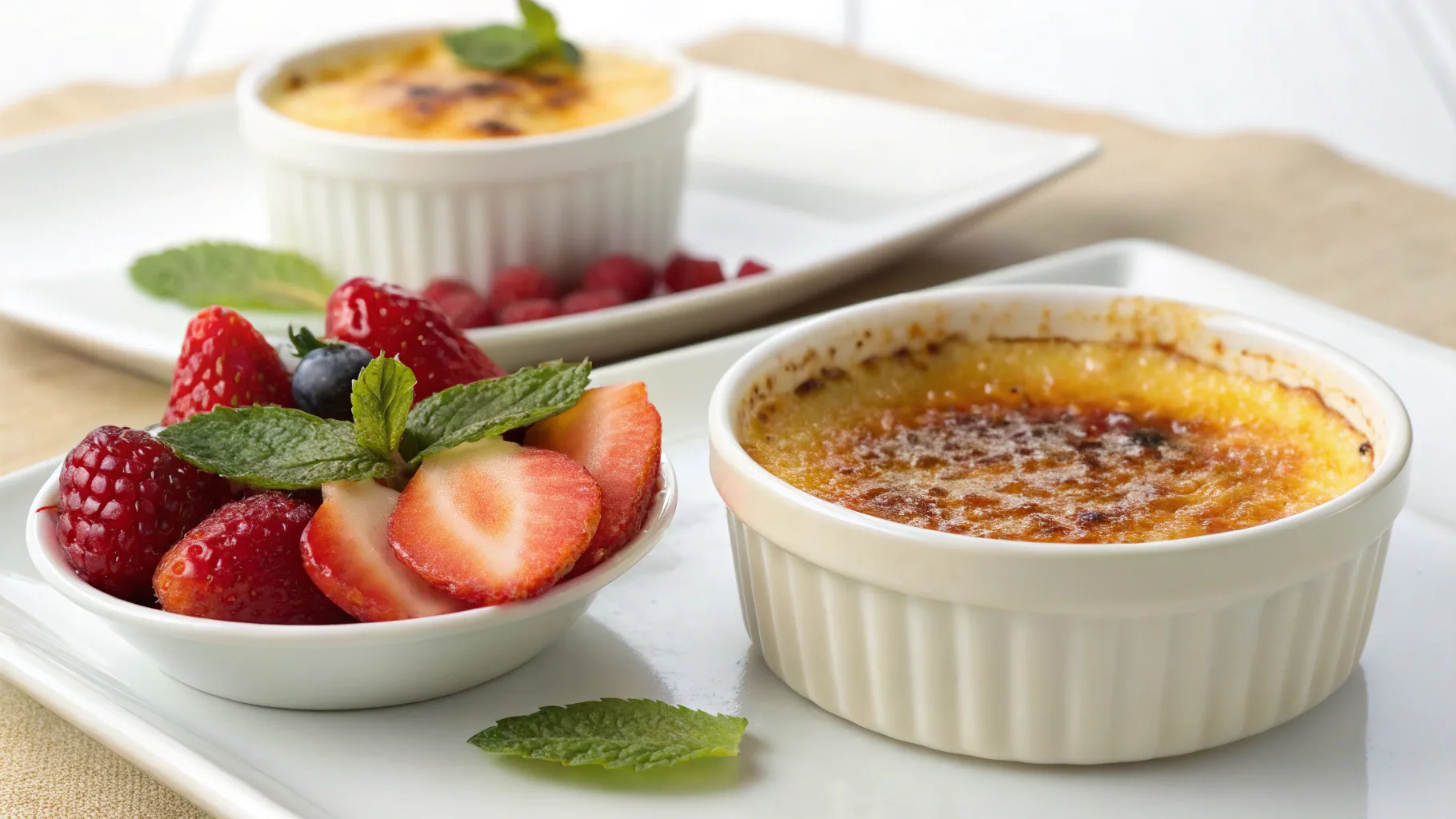
Crème brûlée is a custard dessert that highlights the difference between crème brûlée and custard through its unique caramelized sugar topping. While crème brûlée is technically a custard, its texture and presentation set it apart.
The Origin of Crème Brûlée
Crème brûlée, which translates to “burnt cream” in French, has roots that can be traced back to 17th-century Europe. While France popularized the dessert, early versions of this dish also appeared in England and Spain under different names, such as “Trinity Cream” and “Crema Catalana.” Its enduring appeal lies in its simplicity and striking presentation.
Key Ingredients in Crème Brûlée
The beauty of crème brûlée is its minimalistic ingredient list, yet each component contributes to its luxurious taste and texture:
- Heavy Cream: The base for the custard, providing richness and a silky mouthfeel.
- Egg Yolks: Essential for creating the creamy texture and giving the custard its light yellow hue.
- Sugar: Used both to sweeten the custard and to create the signature caramelized topping.
- Vanilla: Adds a warm, aromatic flavor to the dessert, though some recipes experiment with other infusions like lavender or citrus zest.
The Preparation Process: A Snapshot
Making crème brûlée involves a combination of precision and patience. Here’s a brief overview:
- Making the Custard: The heavy cream is heated and mixed with egg yolks, sugar, and vanilla to form the custard base.
- Baking: The custard is baked in a water bath, ensuring even cooking and preventing curdling.
- Chilling: After baking, the custard is chilled for several hours to achieve the perfect creamy consistency.
- Caramelizing the Sugar: Before serving, a thin layer of sugar is sprinkled on top and caramelized with a torch or broiler, forming a crisp, golden crust.
Crème brûlée’s contrasting textures—smooth custard paired with a brittle caramel top—make it a true culinary masterpiece. While it may seem sophisticated, mastering this dessert is well worth the effort for anyone seeking a sweet reward.
Check out our Easy Crème Brûlée Tips to perfect your own version!
Understanding Custard: What’s the Difference Between Crème Brûlée and Custard?

Custard is one of the most versatile and beloved components in the world of desserts. Its creamy texture and mild sweetness make it a staple in countless recipes, from simple tarts to extravagant puddings. But what exactly is custard, and how does it differ from its more specialized relatives like crème brûlée?
What is Custard?
At its core, custard is a mixture of milk or cream, egg yolks, and sugar that is gently cooked until thickened. The texture can range from silky and pourable to firm and sliceable, depending on the preparation. Custard serves as the foundation for many classic desserts and can even stand alone as a dish.
Types of Custard
There are three primary types of custard, each with its own distinct characteristics and uses:
- Pastry Cream (Crème Pâtissière)
- A thickened custard made with added starch (usually flour or cornstarch).
- Commonly used as a filling for éclairs, cream puffs, and tarts.
- Stirred Custard
- A smooth, pourable custard cooked on the stovetop.
- Examples include crème anglaise (a pouring custard) and custard sauce for desserts like fruit or puddings.
- Baked Custard
- Set in the oven, often in a water bath to ensure even cooking.
- Popular examples include flan, egg custard pie, and, of course, crème brûlée.
Common Uses of Custard in Desserts
Custard’s adaptability is one of its greatest strengths. Here are some popular ways it’s used:
- As a Filling: Perfect for pies, tarts, and pastries like Napoleon and Boston cream pie.
- As a Base: Forms the foundation for recipes like ice cream, cheesecake, and soufflés.
- As a Standalone Dessert: Enjoyed on its own as a simple baked or steamed custard.
Custard’s delicate flavor profile also makes it ideal for infusions. You’ll often find variations that incorporate vanilla, chocolate, coffee, or spices like nutmeg and cinnamon. Its endless possibilities make custard a true culinary workhorse.
Learn more about how to master custard-based desserts with our Baked Custard Recipes.
The Key Differences Between Crème Brûlée and Custard
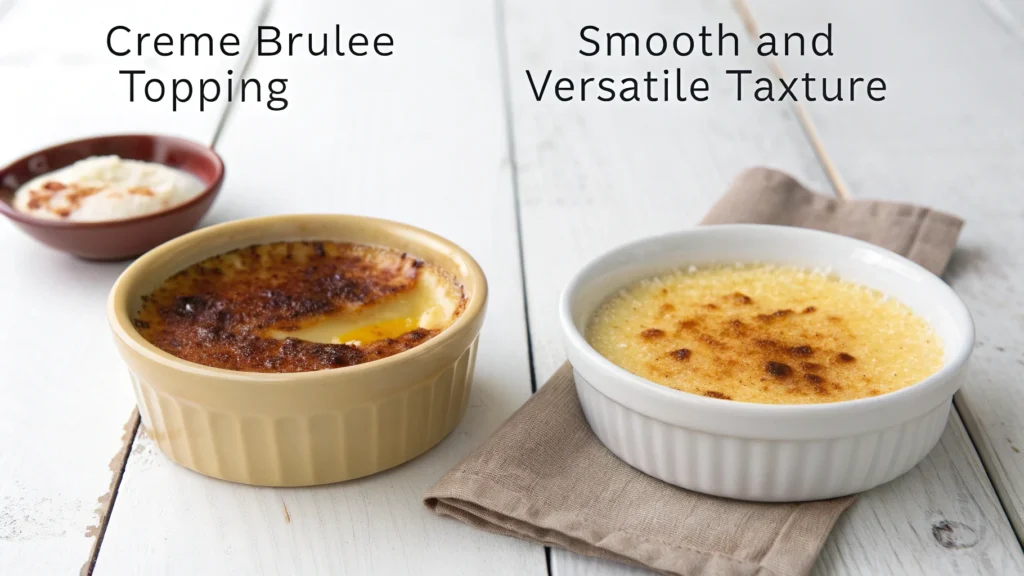
Understanding what’s the difference between crème brûlée and custard begins with texture. Crème brûlée has a rich, silky interior with a crispy sugar topping, while custard varies from creamy to firm depending on its preparation.
Crème Brûlée’s Creamy Core vs. Custard’s Versatility
- Crème Brûlée: The texture is rich and creamy, with a soft, silky interior that melts in your mouth. This consistency is achieved by using a high proportion of cream and a slow baking process.
- Custard: Depending on the type, custard can range from thick and spoonable (e.g., pastry cream) to firm and sliceable (e.g., baked custard pie). Custard’s versatility allows it to be adapted for various dessert applications.
The Sugar Topping: A Signature Feature of Crème Brûlée
- Crème Brûlée: What sets crème brûlée apart is its caramelized sugar topping. This thin, brittle layer is achieved by sprinkling sugar over the chilled custard and heating it with a torch or broiler. The result is a delightful contrast of textures with every bite.
- Custard: Traditional custard doesn’t include a caramelized topping. Instead, it’s often served plain, infused with flavors, or paired with sauces like caramel or fruit compote.
3. Cooking Techniques: Baked vs. Stirred
- Crème Brûlée: Prepared exclusively as a baked custard. It’s cooked slowly in a water bath to ensure even heat distribution, creating its signature creamy texture.
- Custard: While baked custards exist, many varieties, like crème anglaise or stirred custards, are cooked on the stovetop. The method chosen depends on the desired consistency and use.
4. Flavor Profiles and Ingredients
- Crème Brûlée: Its flavor is often kept simple to highlight the rich cream and vanilla, though variations like coffee, chocolate, or citrus are sometimes introduced.
- Custard: Custard’s broader category welcomes diverse flavor profiles, including nutmeg, cocoa, fruits, and spices, allowing for endless creativity.
5. Presentation and Serving
- Crème Brûlée: Always served as an individual dessert in ramekins, with the sugar topping freshly caramelized before serving. Its sophisticated presentation makes it a showstopper.
- Custard: Custard’s presentation varies widely—it can be served in bowls, as a pie filling, or even layered in trifles. Its adaptability is one of its strongest appeals.
6. Cultural Interpretations
- Crème Brûlée: Often associated with French cuisine, it has become a symbol of elegance and luxury in the culinary world.
- Custard: A global dessert staple, custard has countless variations across cultures, including England’s egg custard tart, Spain’s flan, and India’s caramel custard.
Key Takeaway
Crème brûlée and custard may share common roots, but their differences in texture, preparation, and presentation make each unique. Crème brûlée’s caramelized sugar topping and silky richness make it a dessert of distinction, while custard’s versatility ensures it remains a universal favorite.
Check out our Easy Crème Brûlée Tips to try making it yourself!
Is Crème Brûlée a Custard?
Yes, crème brûlée is a custard. However, what’s the difference between crème brûlée and custard lies in how it’s prepared. The caramelized sugar crust is a signature feature exclusive to crème brûlée.
Crème Brûlée’s Custard Base: A Deeper Dive
At its core, crème brûlée is a baked custard. Like all custards, it relies on the delicate balance of eggs, cream, and sugar to create its creamy texture. The rich consistency of crème brûlée comes from:
- A High Cream-to-Milk Ratio: Unlike other custards that may use a combination of milk and cream, crème brûlée typically uses heavy cream for its luxurious texture.
- Egg Yolks as a Thickener: The custard base is thickened by gently heating the egg yolks, ensuring a smooth consistency without scrambling them.
What Sets Crème Brûlée Apart?
While the base of crème brûlée aligns with custard, its defining feature is the caramelized sugar topping. This step is unique to crème brûlée and transforms it from an ordinary custard into an extraordinary dessert.
- Texture Contrast: The brittle sugar crust contrasts with the silky custard beneath, offering a unique eating experience.
- Visual Appeal: The caramelized topping is not just a textural element but also adds a golden, glass-like finish that elevates its presentation.
- Serving Style: Crème brûlée is served in individual ramekins, whereas custards can be presented in a variety of ways, from pies to large dishes.
The Overlap and Distinction
To clarify, crème brûlée fits within the broader definition of custard but represents a specific style. Think of custard as a genre and crème brûlée as one of its most celebrated works.
- Overlap: Both use a base of cream, eggs, and sugar.
- Distinction: Crème brûlée adds a signature caramelized topping, distinguishing it from other custard-based desserts.
Why the Confusion?
The confusion often arises because the term “custard” is used loosely to describe many desserts with similar ingredients. However, crème brûlée’s preparation and presentation elevate it to its own unique category within the custard family.
If you’ve ever wondered, “Is crème brûlée just a custard?” the answer is both yes and no. It’s a custard at heart, but its flair makes it a standout dessert.
Explore more about custard variations in our Baked Custard Recipes.
Crème Brûlée vs. Pudding
Many wonder, ‘Is crème brûlée a pudding?’ The short answer is no. Pudding and custard differ in thickening agents, and what’s the difference between crème brûlée and custard comes down to eggs versus starch as the primary thickener.
What is Pudding?
Pudding, as commonly known in the United States, is a dessert made with milk, sugar, and a thickening agent like cornstarch or gelatin. Unlike custards, pudding is not thickened with eggs but relies on starches to achieve its creamy consistency. This difference in preparation leads to notable variations in texture and flavor.
Key Differences Between Crème Brûlée and Pudding
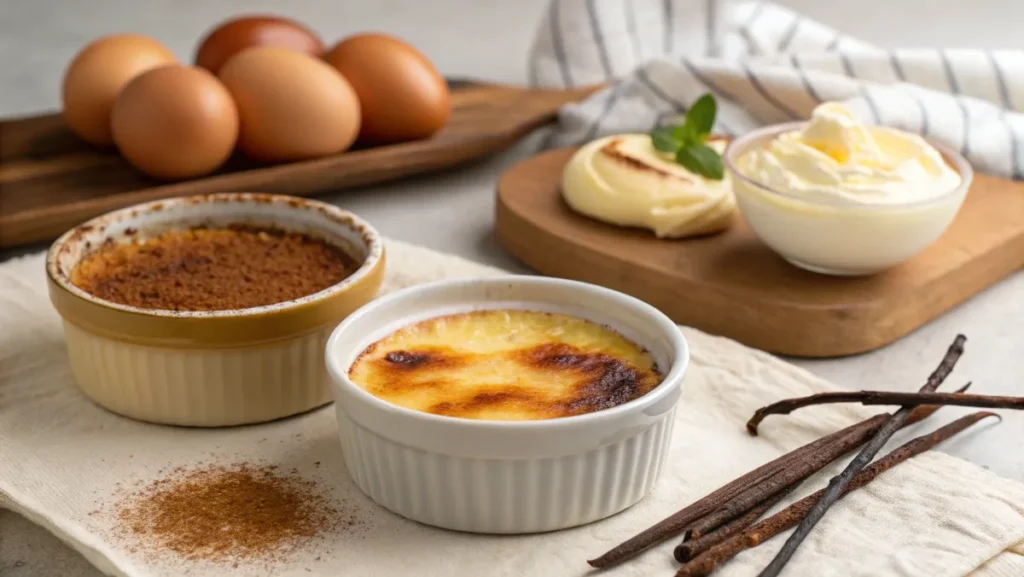
1. Ingredients and Thickening Agents
- Crème Brûlée: Thickened with egg yolks, which are gently cooked to achieve a silky, custard-like texture. The use of heavy cream gives it a rich flavor.
- Pudding: Thickened with cornstarch, flour, or gelatin. It’s often milk-based and has a lighter, more uniform texture compared to crème brûlée.
2. Cooking Methods
- Crème Brûlée: Baked in a water bath, allowing for even cooking of the custard. The caramelized sugar topping is added just before serving for its signature crackly layer.
- Pudding: Typically cooked on the stovetop, where the mixture is heated and stirred until thickened. Once cooled, it’s ready to serve—no baking or caramelization required.
3. Texture and Consistency
- Crème Brûlée: Known for its contrast between the brittle caramel topping and the smooth, rich custard beneath. The high cream content makes it luxuriously thick.
- Pudding: Smooth and creamy but lacks the layered textures of crème brûlée. It’s generally softer and lighter in consistency.
4. Presentation and Serving
- Crème Brûlée: Always served in individual ramekins with a freshly caramelized top. The presentation is elegant and refined, making it a popular choice for upscale occasions.
- Pudding: Typically served in bowls or cups, pudding is a more casual dessert often topped with whipped cream, fruit, or sprinkles.
Flavor Profiles and Variations
- Crème Brûlée: The flavor is simple yet indulgent, often focusing on vanilla or subtle infusions like citrus or espresso. Its charm lies in its richness and caramelized topping.
- Pudding: Offers a broader range of flavors, from chocolate and vanilla to banana and butterscotch. Its versatility makes it a favorite for people of all ages.
Why They’re Not the Same
While both desserts share a creamy base, their key differences lie in their thickening agents, cooking methods, and textures. Crème brûlée is a custard dessert with a caramelized flair, whereas pudding is a starch-thickened treat with a lighter feel.
Check out our Easy Dessert Ideas to explore similar recipes!
FAQs:
To further clarify the distinctions and answer common queries about crème brûlée and custard, here are detailed responses to frequently asked questions:
Is crème brûlée the same as custard?
What are the 3 types of custard?
Pastry Cream (Crème Pâtissière): A thick custard made with added starch, used as a filling for desserts like éclairs and tarts.
Stirred Custard: A pourable custard cooked on the stovetop, often used as a sauce for desserts like puddings and cakes.
Baked Custard: Set in the oven, often in a water bath, this type includes dishes like crème brûlée and flan.
Is crème brûlée basically pudding?
What is the English version of crème brûlée?
For more dessert-related tips and recipes, don’t miss our Classic Desserts Guide.
Conclusion
Now that you know what’s the difference between crème brûlée and custard, why not try making them both at home?
Crème brûlée and custard share a rich culinary history and a love for creamy textures, but their differences make each uniquely special. Whether you’re captivated by the crackly caramel top of crème brûlée or enjoy the versatility of custard in various desserts, there’s a place for both on your plate.
By understanding their distinctions, you’ll appreciate the art and craft behind these iconic treats. So, why not try making them both? With a little practice, you can master the techniques and delight in their rich, creamy flavors.
Discover our Dessert Recipes Collection and start your culinary adventure today!