
What is Japanese Butter Rice?
Japanese Butter Rice, also called “バターご飯” (Bataa Gohan), is a simple dish where warm, steamed Japanese rice is mixed with butter and a dash of soy sauce or salt. The result is a rich, slightly savory dish that enhances the natural sweetness of the rice while adding a smooth, velvety texture.
Learn more about other unique Asian-inspired recipes on Truth Recipes.
Table of Contents
Origins and Cultural Significance
While rice has been a cornerstone of Japanese cuisine for centuries, the addition of butter is a more modern twist. Traditionally, Japanese rice is eaten plain or with seasonings like furikake, soy sauce, or miso-based toppings. However, with the influence of Western ingredients, butter started making its way into Japanese kitchens.
Today, butter rice is often enjoyed as a quick, homemade comfort food, perfect for busy mornings or a side dish to accompany grilled fish, miso soup, or even a simple egg topping.
Ingredients Needed for Authentic Japanese Butter Rice
Essential Ingredients
To make authentic Japanese Butter Rice, you only need a few simple ingredients. However, choosing high-quality ingredients makes a significant difference in the final taste.
- Short-Grain Japanese Rice – The base of the dish, known for its sticky and fluffy texture. Use sushi rice or premium Japanese rice brands.
- Unsalted Butter – Adds a creamy, rich flavor. Unsalted butter is preferred as it allows better control of the seasoning.
- Soy Sauce – Just a dash enhances the umami taste, but it’s optional. Some variations use salt instead.
- Salt – If skipping soy sauce, a pinch of sea salt will bring out the natural flavors.
Optional Additions for Extra Flavor
While traditional Japanese Butter Rice is simple, you can customize it with these delicious variations:
- Garlic Butter – A minced garlic clove sautéed in butter adds a fragrant kick.
- Sesame Seeds – Toasted sesame seeds enhance the nutty flavor.
- Egg – A raw or soft-boiled egg mixed into hot rice creates a creamy, rich texture.
- Nori (Seaweed Strips) – Adds an umami depth to the dish.
- Furikake Seasoning – A mix of dried fish, sesame seeds, and nori for extra flavor.
How to Make Japanese Butter Rice – Step-by-Step Guide
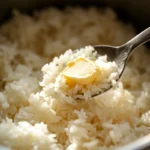
Making Japanese Butter Rice is incredibly simple, but the key to perfection lies in the quality of ingredients and the proper cooking technique. Follow these steps to achieve the best results.
Step 1: Preparing the Rice Properly
Choosing the Right Rice
For the best texture, use short-grain Japanese rice like:
Koshihikari – Soft, sticky, and flavorful.
Sushi rice – Works well if Koshihikari is unavailable.
Washing the Rice
Rinsing rice removes excess starch and prevents it from becoming too gummy.
Place the rice in a bowl and fill it with cold water.
Swirl the rice gently with your hands.
Drain and repeat the rinsing process 3-4 times until the water runs clear.
Cooking the Rice
You can use a rice cooker, stovetop, or an Instant Pot.
Rice Cooker Method
Add the washed rice and the appropriate amount of water to your rice cooker.
Let it soak for 20-30 minutes before turning the cooker on.
Press the start button and allow it to cook.
Once done, let the rice steam for 10 minutes before opening the lid.
Stovetop Method
Add the washed rice and water to a heavy-bottomed pot.
Bring to a boil, then reduce to low heat.
Cover and simmer for 15-18 minutes until the water is fully absorbed.
Turn off the heat and let it sit for 10 minutes before fluffing.
Instant Pot Method
Use a 1:1 rice-to-water ratio.
Pressure cook on high for 5 minutes, then let it naturally release for 10 minutes before opening.
Step 2: The Right Way to Add Butter and Seasoning
Fluff the rice gently with a rice paddle or spoon to release excess steam.
Add 1 tablespoon of unsalted butter per serving while the rice is still hot.
Stir gently until the butter melts and coats the grains evenly.
For extra umami, add a few drops of soy sauce or a pinch of salt.
Mix well and serve warm!
✅ Pro Tip: Want a creamy version? Try stirring in a raw egg yolk for a tamago gohan (Japanese egg rice) twist!

✅ Pro Tip: Want a creamy version? Try stirring in a raw egg yolk for a tamago gohan (Japanese egg rice) twist!
Variations of Japanese Butter Rice

While the classic Japanese Butter Rice is simple and delicious, there are many ways to customize it. Below are some popular variations, including Korean Butter Rice, Garlic Butter Rice, and other flavor-enhanced versions.
Don’t miss our Mayak Eggs Recipe—a perfect topping for Japanese Butter Rice! Check it out here.
Korean Butter Rice vs. Japanese Butter Rice
Though similar, Korean Butter Rice (버터밥 – Beoteo Bap) has some unique characteristics compared to the Japanese version.
| Feature | Japanese Butter Rice | Korean Butter Rice |
|---|---|---|
| Base Rice | Short-grain rice (sushi rice, Koshihikari) | Short or medium-grain rice |
| Butter Type | Unsalted butter | Salted or regular butter |
| Seasoning | Soy sauce or salt | Soy sauce, sesame oil, sometimes gochujang |
| Toppings | Nori, sesame seeds, raw egg yolk | Fried egg, green onions, sesame seeds |
How to Make Korean Butter Rice:
- Prepare steamed rice as usual.
- Place a small cube of butter on hot rice.
- Add a drizzle of soy sauce and a few drops of sesame oil.
- Top with a fried egg, green onions, and sesame seeds for extra flavor.
Korean Butter Rice is slightly richer and nuttier due to sesame oil and often includes a fried egg for a heartier meal.
Garlic Butter Rice – A Flavorful Twist
For those who love garlic-infused flavors, this variation is a must-try. It’s savory, aromatic, and pairs well with grilled meats or seafood.
How to Make Garlic Butter Rice:
Melt butter in a pan and sauté 2 cloves of minced garlic over low heat.
Once the garlic turns golden and fragrant, mix it into your steamed rice.
Add a dash of soy sauce or a sprinkle of salt for extra umami.
Garnish with chopped green onions and sesame seeds.
Pro Tip: You can also add a splash of dashi stock for a deeper Japanese flavor.
Other Flavor Variations of Butter Rice
If you want to experiment, try these unique butter rice variations:
✅ Cheese Butter Rice – Stir in some grated parmesan or shredded mozzarella for an extra creamy texture.
✅ Spicy Butter Rice – Add a bit of chili oil or gochujang (Korean red pepper paste) for heat.
✅ Miso Butter Rice – Mix in a teaspoon of miso paste with the butter for a deep, umami-packed taste.
✅ Shoyu Butter Rice – Use a blend of butter and soy sauce, letting the soy sauce slightly caramelize for a richer flavor.
Why Do People Put Butter in Rice?
The combination of butter and rice might seem simple, but Japanese Butter Rice has a unique taste and texture that people love. Many cultures, including Japanese and Korean cuisine, use butter to enhance their rice dishes. But why is butter added to rice, and what makes it so delicious?
The Science Behind Butter in Rice
Butter is a fat-rich dairy product that interacts with rice grains in several ways:
- Fat Coating the Rice Grains – Butter smoothly coats each grain of rice, preventing clumping and improving texture.
- Enhancing Aroma – The natural butter aroma blends well with steamed Japanese rice, creating an inviting, appetizing fragrance.
- Boosting Umami Flavor – Butter contains glutamates, which intensify the savory, umami depth of Japanese Butter Rice.
- Improving Heat Distribution – When hot rice is mixed with butter, the fat evenly melts, making every bite rich and flavorful.
Taste and Texture Benefits of Japanese Butter Rice
People add butter to rice because it improves both taste and texture.
✔ Creamy, Velvety Texture – Butter melts into the hot rice, creating a smooth and silky consistency.
✔ Balanced Saltiness – A little butter and soy sauce provide a perfect savory balance to the dish.
✔ Satisfying Mouthfeel – The richness of butter enhances the natural softness of Japanese rice.
🔥 Pro Tip: Leftover Japanese Butter Rice tastes even better when reheated, as the butter keeps it from drying out!
Cultural Influence: Why Do the Japanese Add Butter to Rice?
While traditional Japanese cuisine didn’t rely on butter, modern Japanese cooking has embraced it in various ways. Japanese Butter Rice is now a popular comfort food, especially in home cooking and yoshoku (Western-style Japanese dishes).
Steakhouses in Japan serve rice with melted butter and soy sauce for a rich, umami-packed experience.
Hokkaido cuisine frequently uses butter in rice dishes, thanks to the region’s high-quality dairy products.
Japanese fusion cooking incorporates butter into garlic fried rice, miso butter ramen, and seafood butter yaki.
Final Thoughts on Butter in Rice
✔ Japanese Butter Rice has gained popularity because of its rich taste, smooth texture, and umami-packed flavor.
✔ Butter enhances the natural flavor of rice, making it a simple yet irresistible dish.
✔ The combination of butter and soy sauce is a signature flavor in many modern Japanese rice dishes.
Is Japanese Butter Rice Healthy?
Japanese Butter Rice is a simple and delicious dish, but is it a healthy choice? The answer depends on portion size, ingredients, and dietary balance. Let’s explore the nutritional profile, health benefits, and potential concerns of this dish.
Nutritional Breakdown of Japanese Butter Rice
Here’s the approximate nutritional value per serving (1 cup of Japanese Butter Rice with 1 tablespoon of butter):
| Nutrient | Amount |
|---|---|
| Calories | 250-300 kcal |
| Carbohydrates | 45g |
| Protein | 4g |
| Fats | 10-12g |
| Saturated Fat | 7g |
| Sodium | Varies (based on salt/soy sauce) |
🔹 Key Takeaway: Japanese Butter Rice is high in carbohydrates and fats, making it an energy-dense meal. While it provides quick energy, portion control is essential for a balanced diet.
Health Benefits of Japanese Butter Rice
Despite its richness, Japanese Butter Rice offers some nutritional benefits:
✅ Good Source of Energy – The combination of carbs (from rice) and fats (from butter) provides long-lasting energy, making it a great pre-workout meal.
✅ Contains Healthy Fats – High-quality butter, especially grass-fed, contains omega-3 fatty acids and butyrate, which may support gut health.
✅ Boosts Satiety – The fat in butter rice helps you feel full longer, preventing overeating.
✅ Rich in Umami Flavor – The combination of butter and soy sauce enhances natural umami, reducing the need for excessive salt or artificial seasonings.
Potential Health Concerns of Japanese Butter Rice
While Japanese Butter Rice is delicious, eating it too often can lead to some health concerns:
⚠️ High in Calories – Consuming large portions regularly may contribute to weight gain if not balanced with physical activity.
⚠️ Saturated Fat Intake – Butter contains saturated fat, which, in excessive amounts, can impact heart health. Using smaller portions of butter can help.
⚠️ Blood Sugar Spikes – White rice has a high glycemic index (GI), which can cause blood sugar fluctuations, especially for people with diabetes.
🔹 How to Make Japanese Butter Rice Healthier:
Use Brown Rice or Mixed Grains – Increases fiber, vitamins, and reduces blood sugar spikes.
Reduce Butter Quantity – Instead of 1 tablespoon, use ½ tablespoon to lower fat intake.
Add Protein & Fiber – Pair it with vegetables, eggs, tofu, or grilled fish to make a more balanced meal.
Final Verdict: Is Japanese Butter Rice Healthy?
✔ Japanese Butter Rice can be part of a healthy diet if eaten in moderation.
✔ To keep it nutritious, balance it with protein and fiber-rich side dishes.
✔ Using smaller portions of butter and pairing it with whole grains makes it a healthier alternative.
Do Japanese Use Butter in Cooking?
While traditional Japanese cuisine did not heavily rely on butter, modern Japanese cooking has embraced it in various dishes. Today, butter is a common ingredient in both savory and sweet Japanese recipes, adding richness and depth of flavor.
Looking for inspiration? Try Ube Milk Bread, a delicious Hokkaido butter-infused treat! Read the recipe here.
Traditional vs. Modern Japanese Cuisine
🔹 Traditional Japanese Cooking (Washoku)
- Focuses on natural umami flavors from dashi, miso, soy sauce, and fermented foods.
- Cooking fats primarily come from sesame oil, fish oil, and little to no dairy products.
- Butter was not commonly used historically due to Japan’s low dairy consumption before Western influence.
🔹 Modern Japanese Cooking (Yoshoku & Western Influence)
- Western-style Japanese cuisine (Yoshoku) introduced butter, cheese, and cream into popular dishes.
- Hokkaido, Japan’s dairy hub, produces high-quality butter used in many dishes, from ramen to pastries.
- Butter is now a key ingredient in Japanese fusion cooking, blending traditional umami flavors with creamy richness.
Popular Japanese Dishes That Use Butter
Although Japanese Butter Rice is one of the simplest ways to use butter, many Japanese dishes feature butter as a main ingredient.
✅ Miso Butter Ramen (味噌バターラーメン) – A specialty from Hokkaido, where butter melts into the miso broth, creating a rich, creamy texture.
✅ Butter Corn (バターコーン) – Corn sautéed with butter and soy sauce, often served as a topping for ramen or as a simple side dish.
✅ Seafood Butter Yaki (シーフードバター焼き) – Shrimp, scallops, or salmon grilled with butter and garlic, commonly served in izakayas.
✅ Butter Shoyu Chicken (バター醤油チキン) – Chicken stir-fried in butter and soy sauce, a popular home-cooked comfort meal.
✅ Hokkaido Butter Rolls (バターロール) – A soft, slightly sweet Japanese bread roll, enriched with butter for a fluffy and delicate texture.
✅ Japanese Butter Cookies (北海道バタークッキー) – A famous Hokkaido butter-based cookie, known for its rich, buttery flavor.
Conclusion:
If you love Japanese comfort food, Japanese Butter Rice is a must-try! It’s easy to make, requires only a few ingredients, and pairs well with a variety of side dishes. Whether you stick to the classic version or experiment with Korean, garlic, or miso butter variations, this dish is a delicious and satisfying meal for any occasion.
🔥 Love exploring new recipes? Follow us on Pinterest for a treasure trove of mouthwatering dishes! → Pinterest
🥢 Craving more Japanese-inspired flavors? Stay updated with exclusive recipes, cooking hacks, and food inspiration on our Facebook page! → Facebook
📌 Don’t miss out on trending recipes! Follow Truth Recipes for quick, easy, and flavorful meal ideas. Join our food-loving community today!