
Crème brûlée isn’t just a dessert – it’s a French masterpiece that tantalizes the senses and offers a moment of indulgence. This luxurious dish, known for its silky custard base and brittle caramelized sugar top, delivers a taste that’s hard to forget. But if you’ve never had it, you might wonder – what does crème brûlée taste like? Discover more culinary delights and connect with us on our Facebook page.
Table of Contents
The Flavor Profile of Crème Brûlée
Crème brûlée is more than just a sweet dish – it’s a delicate dance of flavors that feels both indulgent and refined. At first bite, you’re greeted by the smooth, creamy custard infused with the floral and slightly earthy aroma of high-quality vanilla. But that’s just the beginning.
The Balance of Vanilla and Cream
At its heart, crème brûlée is vanilla custard. But don’t be fooled – this isn’t your average pudding. The custard base blends heavy cream, egg yolks, and sugar, resulting in a rich yet airy dessert. The cream delivers a luxurious mouthfeel, while the vanilla, often sourced from real vanilla beans, adds layers of complexity. The floral sweetness of vanilla lingers, creating a harmony between sweetness and richness that isn’t overwhelming.
For the best experience, chefs often opt for fresh vanilla pods over synthetic extracts. Why? Because real vanilla isn’t just sweet – it’s nutty, slightly smoky, and carries hints of caramel, amplifying the custard’s flavor tenfold.
Caramelized Sugar – Adding Sweet, Nutty Complexity
The top layer of crème brûlée, the iconic caramelized sugar, adds more than just crunch – it adds flavor depth. The sugar is torched until it melts and oxidizes, producing nutty, slightly bitter notes that perfectly contrast the sweetness of the custard beneath. This juxtaposition of flavors is what sets crème brûlée apart from other desserts.
Imagine biting into the dessert – the caramel shatters beneath your spoon, releasing rich, toasted aromas that blend with the cold custard below. This play of hot and cold, sweet and bitter, is precisely why crème brûlée earns its reputation as a culinary classic.
Why Quality Vanilla Matters in Taste
Vanilla may seem like a simple flavor, but its origin significantly impacts the overall taste of crème brûlée. Vanilla beans harvested from Madagascar or Tahiti are renowned for their robust, nuanced profiles. On the flip side, artificial vanillin – while more affordable – lacks the subtle floral and fruity undertones found in the real deal.
The richer the vanilla, the more indulgent the custard. Using premium vanilla ensures that the dessert delivers a sophisticated, multi-dimensional flavor, elevating it from good to absolutely unforgettable.
How the Custard’s Richness Defines the Flavor
Custard isn’t just about sweetness – it’s about depth. The egg yolks introduce a creamy, almost buttery texture that carries the vanilla essence throughout the dish. The custard should melt on your tongue, leaving behind lingering notes of cream, egg, and caramel.
In comparison to lighter desserts, crème brûlée leans into its richness, but never crosses the line into heaviness. It’s luxurious yet delicate, making it the perfect sweet treat to end a fine meal.
The Unique Texture and Temperature Contrast

Crème brûlée isn’t just about flavor – its texture and temperature play a huge role in the overall experience. From the first crack of the caramelized sugar top to the silky custard below, every bite feels like a perfect blend of contrasts. This combination is part of the reason why people ask, what does crème brûlée taste like?
Chilled Custard with a Warm, Crunchy Layer
One of the defining features of crème brûlée is the contrast between temperatures. The custard, often refrigerated for hours, is served cold. Yet, just before serving, the sugar on top is torched, creating a thin, warm caramel layer. This striking difference between the cold, creamy custard and the hot, crisp sugar makes each spoonful uniquely satisfying.
Why does this contrast matter? It heightens the sensory experience. The caramel layer shatters with the slightest tap, giving way to the custard’s velvety texture. This duality of temperatures and textures creates a dessert that feels light yet indulgent at the same time.
How Temperature Impacts the Taste Experience
Temperature influences how flavors develop on the palate. The cool custard allows the vanilla’s floral notes to shine, while the warm caramel enhances nutty, slightly bitter flavors. This interplay balances the dessert’s sweetness, ensuring that each bite isn’t overpowering.
If you’ve ever wondered, what does crème brûlée taste like?, this texture contrast is part of the answer. It’s not just about taste – it’s about how the dessert feels in your mouth. The combination of creamy, cold, hot, and crispy is what elevates crème brûlée to an iconic status in French cuisine.
How Crème Brûlée Is Traditionally Served and Enjoyed
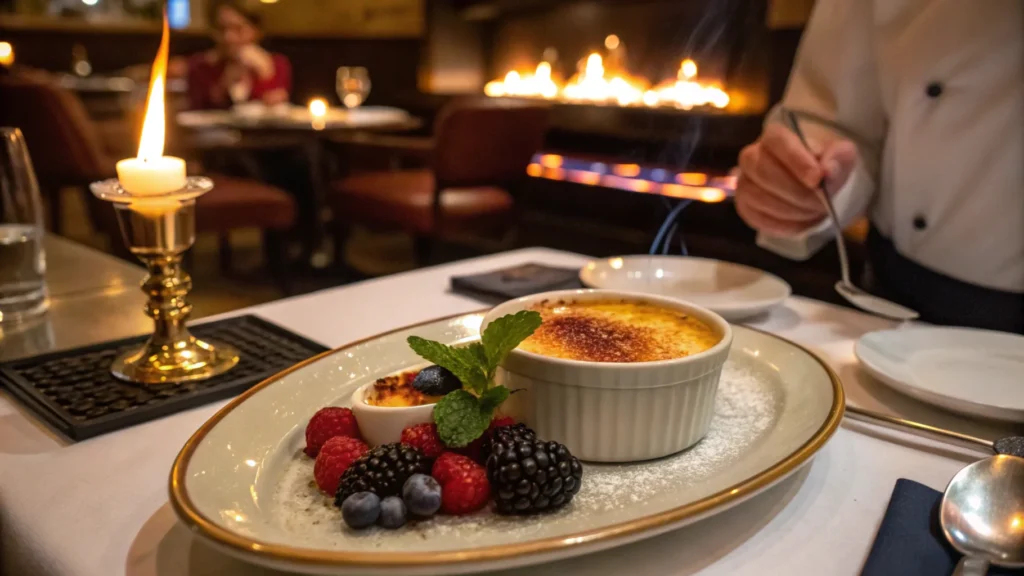
Beyond its flavor and texture, the presentation of crème brûlée adds to its allure. Whether at a high-end restaurant or a cozy kitchen, the ritual of caramelizing the sugar often becomes a mini performance. This dessert isn’t just served – it’s crafted in front of you.
The Importance of Ramekins and Heavy Spoons
Crème brûlée is traditionally served in small, round ramekins. These shallow dishes ensure even cooking and allow the custard to chill properly. When served, a heavy metal spoon is essential – not just for aesthetics but for function. The weight of the spoon helps break through the caramel layer, giving you that satisfying crack.
Without this signature break, the experience just wouldn’t be the same. That first crack through the sugar top is as much a part of the dessert as the custard itself.
Table-Side Caramelization – A Visual Treat
In fine dining, crème brûlée is often torched at the table. This final touch not only adds to the show but also ensures that the caramelized sugar is fresh and warm. Watching the sugar bubble and harden right before your eyes builds anticipation.
If you’ve ever found yourself asking, what does crème brûlée taste like?, remember – it’s not just about the custard. The experience is multi-sensory, from the sight of the blowtorch flame to the aroma of caramelizing sugar.
The Caramelized Sugar Top – A Sensory Experience
The caramelized sugar top is what truly defines crème brûlée, turning a simple custard into a luxurious dessert with layers of flavor and texture. It’s not just a garnish – it’s the heart of the experience.
The Science of Caramelization
When sugar is exposed to high heat, it undergoes a process called caramelization. The sugar melts, darkens, and develops a complex profile of nutty, toasty, and slightly bitter flavors. This transformation is key to creating the signature thin, glassy layer that cracks under the pressure of a spoon.
The bitterness from the caramelized sugar helps balance the custard’s sweet, floral vanilla notes, creating a delightful contrast that excites the palate. If you’ve been wondering, what does crème brûlée taste like? – this bitter-sweet combination is one of the dessert’s most distinctive features.
Why the Slight Bitterness Balances the Sweetness
Crème brûlée isn’t overwhelmingly sweet, and that’s thanks to this caramel layer. The slightly bitter, smoky taste prevents the dessert from becoming cloying. It complements the richness of the custard without overpowering it, making every bite a dance of sweet, creamy, and crunchy flavors.
Pro tip: If you’re making crème brûlée at home, use a butane torch to caramelize the sugar. This gives you more control and ensures that the custard beneath stays cool, preserving the signature hot-cold contrast of the dessert.
Understanding Custard – The Base of Crème Brûlée
At its core, crème brûlée is essentially custard – but not just any custard. The base is a rich, velvety mixture of cream, egg yolks, and sugar, often flavored with high-quality vanilla beans.
What Is Custard?
Custard is a simple combination of milk or cream thickened with egg yolks. Slowly heated, the egg proteins coagulate, transforming the liquid into a soft, silky cream. This process forms the foundation of many classic desserts, but crème brûlée takes it a step further by layering on that crunchy, caramelized top.
The custard in crème brûlée isn’t just smooth – it’s luxuriously rich. The high cream content results in a dessert that feels indulgent but light enough to melt in your mouth.
For those curious about the custard-making process, you can check out this guide on what crème brûlée is made of for more insights into the ingredients and methods.
Vanilla as the Main Flavoring Agent
Vanilla is the star of the show in crème brûlée. Whether you use whole vanilla beans, paste, or extract, the quality of the vanilla directly impacts the flavor. The best crème brûlée features subtle floral, sweet, and slightly woody notes from real vanilla beans, elevating the custard to something unforgettable.
If you’re looking to experiment with flavors, try infusing the custard with citrus zest, coffee, or even lavender. However, the classic vanilla version remains the gold standard for its timeless simplicity.
FAQs
Does crème brûlée taste good?
Absolutely! Crème brûlée is often described as decadent, creamy, and luxurious. The combination of silky custard and crispy, caramelized sugar creates a perfect balance of sweet and slightly bitter flavors. It’s rich without being overly heavy, making it a dessert that leaves a lasting impression. If you enjoy custard-based desserts, you’ll likely find crème brûlée irresistibly delicious.
How do you describe crème brûlée?
Crème brûlée is a French dessert that features a smooth, creamy custard base topped with a thin, hardened layer of caramelized sugar. It’s rich and velvety with a sweet, floral vanilla flavor, while the caramelized top adds a toasty, slightly bitter crunch. The contrast between the cool custard and warm caramelized sugar creates a unique sensory experience that’s both simple and indulgent.
What flavor is crème brûlée?
The dominant flavor of crème brûlée is vanilla, with subtle notes of caramel and nuttiness from the caramelized sugar top. Depending on the recipe, you may also detect hints of citrus, coffee, or other infusions. The sweet custard contrasts beautifully with the toasted, slightly smoky sugar, creating a multi-layered flavor profile.
What is crème brûlée similar to?
Crème brûlée is similar to other custard-based desserts like:
- Flan – A lighter, jiggly custard with a soft caramel sauce.
- Panna Cotta – An Italian dessert with a gelatin-thickened cream base, but without the caramelized sugar topping.
- Crema Catalana – A Spanish version flavored with citrus and cinnamon, featuring a caramelized sugar crust.
While these desserts share similarities, crème brûlée stands out for its contrast between warm, crackly sugar and cool, creamy custard.
Conclusion – The Indulgent Charm of Crème Brûlée
So, what does crème brûlée taste like? It’s a delightful mix of rich, creamy custard and crisp caramelized sugar, creating an unforgettable sensory experience. The contrast of hot and cold, sweet and bitter, makes each spoonful a treat for the palate.
Crème brûlée stands out as a dessert that’s both simple and elegant. With just a few ingredients, it transforms into a luxurious treat that feels right at home in fine dining restaurants or your own kitchen.
If you’ve never tried making it, now might be the time. This dessert’s ability to impress guests and satisfy cravings makes it a must-have in any recipe collection. Plus, the process of torching sugar to create that iconic crackling top is half the fun.
For more dessert inspiration, check out this guide on crème brûlée ingredients and tips.
Variations of Crème Brûlée Across the Globe
Crème brûlée may be a French classic, but variations of this custard dessert have popped up around the world. Each version offers a unique twist while still honoring the essential elements – a creamy custard base and a caramelized sugar top. But do these variations change the answer to the question, what does crème brûlée taste like? Not entirely – they enhance the experience.
Spanish Crema Catalana
Spain’s take on crème brûlée, known as Crema Catalana, swaps out heavy cream for milk and cornstarch. Infused with citrus zest and cinnamon, it carries a lighter, more refreshing flavor compared to the rich French version. The caramelized sugar layer remains, delivering that signature crunch.
Despite the different ingredients, the textural contrast between the smooth custard and crisp sugar mirrors the experience of traditional crème brûlée. If you ever find yourself in Barcelona, tasting Crema Catalana might just give you a new appreciation for custard desserts.
Italian Zabaglione
Italy’s Zabaglione doesn’t feature a hardened sugar crust, but it shares the silky custard texture that makes crème brûlée irresistible. Made with egg yolks, sugar, and wine, it’s often served with fresh fruit. While it lacks the signature crack, the creamy, airy texture provides a light yet decadent experience.
If you’re asking, what does crème brûlée taste like compared to Zabaglione, the difference lies in the depth of flavor and the absence of a caramelized top.
Tips for the Perfect Crème Brûlée at Home
Making crème brûlée at home might sound intimidating, but with the right approach, you can achieve restaurant-quality results. If you’ve ever wondered, what does crème brûlée taste like fresh out of your kitchen, the answer is simple – heavenly.
Choose Quality Ingredients
The flavor of crème brûlée hinges on the quality of its ingredients. Use fresh cream, high-quality vanilla beans or paste, and farm-fresh eggs. Artificial vanilla can work in a pinch, but real vanilla provides that floral, aromatic richness that sets this dessert apart.
For an added twist, consider infusing the cream with lavender, coffee, or even matcha. This personal touch will give your crème brûlée a unique flavor profile.
Master the Caramelization
The hallmark of crème brûlée is the glass-like sugar top. To get it just right, sprinkle an even layer of sugar over the custard and torch it until it turns a golden amber color. If you don’t have a torch, place the ramekins under a broiler – just watch carefully to avoid burning.
The key is balance. A thin layer of sugar caramelizes quickly, ensuring that the custard underneath stays cool and creamy.