
Crème brûlée is more than just a dessert – it’s a symbol of indulgence, elegance, and timeless culinary artistry. With its rich, velvety custard base and signature caramelized sugar topping, this French classic has found a cherished spot on dessert menus worldwide. But what is crème brûlée made of? From the humble ingredients to the fascinating history and expert techniques, this guide will take you on a delicious journey through everything there is to know about this iconic dessert.
We’ll explore the core ingredients, trace its historical roots, and uncover the secrets behind crafting the perfect crème brûlée at home. Whether you’re a dessert aficionado or just curious about how this treat comes together, this article will leave you with a newfound appreciation for crème brûlée. For more updates and dessert inspiration, visit our Facebook page.
Table of Contents
Introduction to Crème Brûlée
What is Crème Brûlée?
Crème brûlée, which translates to “burnt cream”, is a luxurious dessert featuring a silky custard base and a crisp layer of caramelized sugar on top. Served in individual ramekins, its contrast of textures – creamy beneath, crunchy above – is what makes it truly irresistible. This dessert is often flavored with vanilla, but modern variations introduce chocolate, coffee, and even fruit infusions.
The custard base is a delicate blend of cream, egg yolks, sugar, and vanilla. Once baked, a thin layer of sugar is sprinkled over the custard and torched to create that iconic caramelized crust. The satisfaction of cracking the top with a spoon, revealing the smooth custard below, is part of the dessert’s charm.
The Meaning Behind the Name ‘Crème Brûlée’
The name crème brûlée directly refers to the technique of burning sugar over the custard’s surface. This “brûlée” effect is what distinguishes it from similar custard-based desserts, such as crème caramel or flan. While crème caramel has a syrupy top, crème brûlée stands out with its brittle caramel shell.
Why Crème Brûlée is a Timeless Dessert
Crème brûlée has remained a beloved dessert for centuries, not just for its taste but for the experience it offers. Its simplicity – made from only a few basic ingredients – belies the sophistication it exudes when served. Moreover, the versatility of crème brûlée recipes ensures that chefs continue to reinvent and reinterpret this classic dish, keeping it firmly in the spotlight.
Key Ingredients in Crème Brûlée

Essential Ingredients for Authentic Crème Brûlée
When asking what is crème brûlée made of, the answer lies in a few simple yet luxurious ingredients. Authentic crème brûlée revolves around four essentials – heavy cream, egg yolks, sugar, and vanilla. Each plays a pivotal role in creating the dessert’s rich, creamy base and crunchy top layer.
Here’s a quick breakdown of the key ingredients:
| Ingredient | Purpose |
|---|---|
| Heavy Cream | Provides a smooth, rich custard texture |
| Egg Yolks | Thickens the custard, adding creaminess |
| Sugar | Sweetens the custard and caramelizes on top |
| Vanilla | Infuses the custard with flavor |
The beauty of crème brûlée is that these simple ingredients come together to create something extraordinary. For the best results, always use fresh, high-quality cream and eggs. Vanilla beans are preferable to extract, as they impart a more intense and natural flavor.
Variations in Ingredients Across Different Cultures
Though traditional crème brûlée uses vanilla, many chefs experiment with flavors to put their own twist on the classic. In Spain, a similar dessert, crema catalana, uses lemon or orange zest and sometimes cinnamon. In Italy, zabaione shares a custard-like texture but often incorporates sweet wine.
In modern kitchens, crème brûlée often features ingredients like lavender, espresso, chocolate, or even matcha. These variations add unique flavors without straying from the dessert’s essence. However, the core ingredients – cream, eggs, and sugar – remain non-negotiable.
The Role of Cream, Sugar, and Eggs in Crème Brûlée
The custard’s signature creaminess comes from the balance between egg yolks and cream. Too many yolks result in a thick, overly dense custard, while too much cream makes it runny. The sugar not only sweetens the custard but also forms the golden caramelized top layer.
Heating the sugar with a blowtorch creates the signature hard caramel crust – the element that sets crème brûlée apart from other custard-based desserts. Without this layer, the dessert lacks its characteristic texture contrast.
Can You Make Crème Brûlée Without Cream?
Technically, yes. While heavy cream is traditional, some recipes substitute it with coconut cream or whole milk. This results in a lighter dessert, but the custard may not achieve the same velvety consistency. Substituting cream affects the texture, so it’s recommended only for dietary preferences.
The History and Origins of Crème Brûlée
Early Mentions in 17th Century France
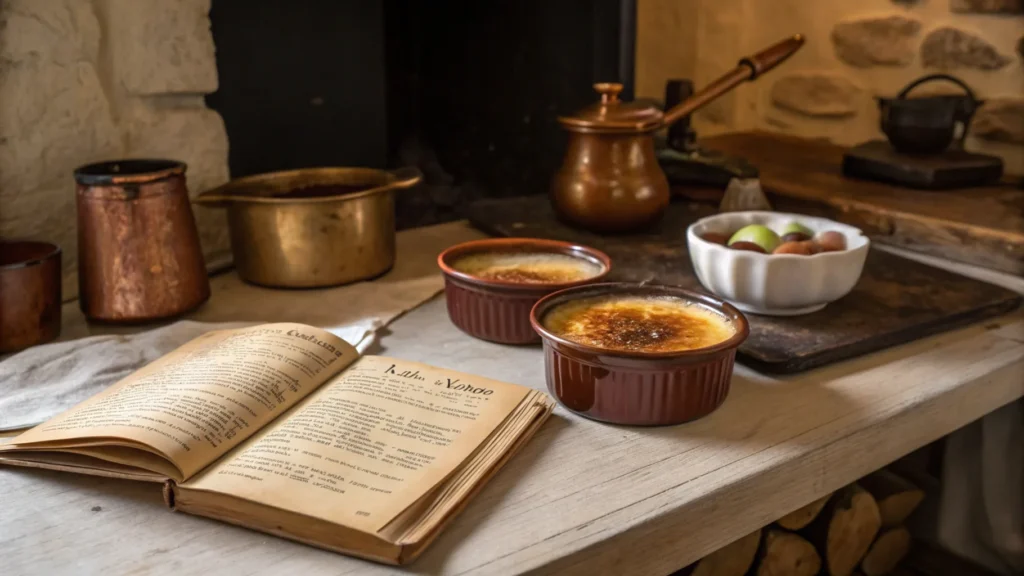
The origins of crème brûlée are a topic of debate, but most historians trace it back to 17th-century France. The earliest known recipe appeared in François Massialot’s cookbook “Cuisinier royal et bourgeois”, published in 1691. Massialot described a custard topped with sugar, caramelized using a red-hot iron.
Interestingly, despite its French roots, crème brûlée draws inspiration from similar European desserts like crema catalana from Spain. This dish, also custard-based, involves browning sugar on top before serving. However, crema catalana typically uses cornstarch to thicken the custard.
The Influence of Catalan Crema and English Cream
Some believe crème brûlée may have originated from English cream desserts, like Trinity Cream served at Trinity College, Cambridge. This version also features a caramelized top layer, with the college crest sometimes branded into the sugar. In fact, crème brûlée was sometimes referred to as “Cambridge burnt cream”.
Spain’s crema catalana likely influenced French chefs, who refined the dessert by incorporating their own techniques. The French version focuses more on egg yolks and cream, which gives it a richer texture compared to its Spanish cousin.
The Popularity Boom in the 1980s
Despite its long history, this iconic dessert didn’t gain widespread popularity until the 1980s. It became a restaurant staple, especially in upscale French bistros. Sirio Maccioni, the legendary restaurateur at Le Cirque in New York, is often credited with introducing it to the American dining scene.
By the late 20th century, crème brûlée had become synonymous with fine dining. Its simplicity, elegance, and showmanship – with chefs torching the sugar tableside – contributed to its allure. Today, crème brûlée remains a symbol of culinary sophistication, cherished by both home cooks and professional chefs.
Techniques for Making Crème Brûlée
The Traditional Method
The secret to making the perfect custard dessert lies in mastering the base and achieving that signature caramelized top layer. When exploring what goes into this French classic, it’s essential to understand how each ingredient is treated during preparation.
To begin, heavy cream is heated until it’s just about to simmer. Meanwhile, egg yolks and sugar are whisked together until pale and slightly thickened. This mixture is tempered – meaning hot cream is slowly poured into the yolks – to prevent scrambling. The custard is then flavored with pure vanilla extract or vanilla bean seeds.
Once mixed, the custard is poured into individual ramekins and placed in a baking dish. Hot water is added to the dish, creating a bain-marie (water bath) that ensures the custard cooks evenly. Baking at a low temperature prevents the eggs from curdling and keeps the custard luxuriously smooth.
Hot vs. Cold Custard Methods – Which One is Best?
There are two primary methods for making crème brûlée: the hot method and the cold method.
- The hot method involves heating cream and whisking it into egg yolks, followed by baking. This approach yields a thicker, more decadent custard.
- The cold method skips the heating process, mixing all ingredients cold and directly baking. This results in a lighter, silkier texture.
While both methods work, the hot method is more traditional and typically produces richer results.
Caramelization Techniques – Blowtorch vs. Salamander
After the custard cools, the fun part begins – caramelizing the sugar. This step creates the iconic crunchy top layer, transforming ordinary custard into a decadent dessert.
- Blowtorch – The most common tool for caramelizing. It allows precise control over the sugar, ensuring it melts evenly.
- Salamander (broiler) – Used by professionals, this kitchen tool evenly browns the sugar, though a home broiler can achieve similar results.
For best results, apply a thin, even layer of sugar before caramelizing. Tilt the ramekin as you torch to avoid burning.
Common Mistakes to Avoid When Making Crème Brûlée
- Overbaking the custard – Causes a rubbery texture. Custard should jiggle slightly when removed from the oven.
- Using too much sugar for caramelization – Leads to uneven melting and a bitter flavor.
- Skipping the water bath – This step is crucial for even cooking.
Flavor Variations and Modern Twists
Classic Vanilla Crème Brûlée
Vanilla remains the gold standard when considering the ingredients of this iconic French dessert. Its simple, elegant flavor enhances the rich custard and crisp caramelized top. A traditional vanilla version calls for pure vanilla bean or high-quality extract to achieve the best results.
Infusing Flavors – Chocolate, Coffee, and More
This classic French dessert can easily be adapted to different flavor profiles. Popular variations include:
- Chocolate Crème Brûlée – Melt dark chocolate into the cream for a rich twist.
- Espresso Crème Brûlée – A shot of espresso adds a bold, sophisticated touch.
- Matcha Crème Brûlée – Green tea powder infuses the custard with a subtle bitterness, balancing the sweetness.
For a fruity flair, try adding lemon zest, orange essence, or berries to the custard mixture.
Fruit Garnishes and Additional Toppings
Though the caramelized sugar layer is essential, garnishes like raspberries, blueberries, or mint leaves add freshness and visual appeal. A drizzle of berry coulis or chocolate sauce can also elevate the presentation.
Serving and Presentation
How to Serve Crème Brûlée for Maximum Impact
Presentation plays a big role in elevating this classic French dessert from simple to showstopping. After all, half the joy comes from cracking through that caramelized top. To serve it at its best, keep the custard chilled until right before torching the sugar. This creates a delightful contrast between the cool, creamy base and the warm, crisp topping.
When presenting this classic French dessert, individual ramekins are essential. The smaller portions ensure even cooking and make for an elegant serving size. Plus, the ramekins allow each guest to experience the satisfying “crack” of breaking the sugar crust.
For extra flair, add a garnish like fresh berries, mint leaves, or a light dusting of powdered sugar. A drizzle of fruit coulis or caramel sauce can enhance the dessert’s richness without overpowering the classic flavor.
Ramekin Selection and Presentation Tips
Choosing the right ramekin makes a difference. Opt for shallow, wide ramekins – this allows for more surface area, ensuring a thin layer of custard and a perfectly caramelized top. A thicker caramel layer can overpower the dessert’s delicate balance, so keep the sugar layer light.
FAQs
What Does ‘Brûlée’ Mean in Crème Brûlée?
The term “brûlée” translates to “burnt” in French, highlighting the caramelized sugar topping that crowns the custard. This golden, crisp layer provides the dessert’s signature crunch. When people inquire about the ingredients or process, the word brûlée points directly to the final step – torching the sugar to achieve that iconic finish.
Can I Make Crème Brûlée Without a Blowtorch?
Yes, you can achieve the same caramelized effect using an oven broiler. Simply place the ramekins under the broiler for a minute or two until the sugar bubbles and darkens. However, a blowtorch offers more control and ensures an even caramelization.
What Type of Sugar is Best?
Granulated sugar works best for caramelizing crème brûlée. It melts evenly and forms a consistent layer. Turbinado sugar can also be used for a deeper, richer caramel flavor, but it may take longer to melt.
Conclusion
Crème brûlée’s charm lies in its simplicity and elegance. Despite being made from just a handful of ingredients, it consistently delivers a luxurious experience. When asked, what is crème brûlée made of, the answer highlights the magic of cream, eggs, sugar, and vanilla. Yet, it’s the contrast of textures – creamy custard beneath and crisp caramelized sugar on top – that keeps it timeless.
From fine dining establishments to home kitchens, crème brûlée remains a symbol of culinary sophistication. Its adaptability to new flavors and presentations ensures it will continue to captivate dessert lovers for generations to come.
Additional Tips and Tricks
Perfecting the Sugar Crust
The hallmark of great crème brûlée is the sugar crust. Use fine granulated sugar and spread it evenly over the custard. Tilt the ramekin to distribute the sugar before caramelizing it with a blowtorch. This method helps avoid thick, uneven spots.
If you don’t have a torch, the broiler works just as well. Place ramekins on the top rack and watch closely – the sugar melts fast. Rotate the ramekins to ensure even caramelization.
Making Crème Brûlée Ahead of Time
This custard-based dessert is perfect for preparing in advance. You can bake the custard a day ahead, keeping it chilled until ready to serve. Just hold off on caramelizing the sugar until the last minute – this guarantees the sugar crust stays crisp and doesn’t soften in the refrigerator.
For more decadent desserts, check out Truth Recipes’ Crab Brûlée, a savory twist on the classic treat!